Rockscape, Rock Walkway or Sod for a Dry Cheyenne Yard
Each ground cover has a job it does well and a job it does poorly, and a dry, windy yard exposes the difference quickly.
October 21, 2026 · 4 min read
Start with what the space actually does
Before you pick a material, decide what each part of the yard is for. A patch where kids and dogs run all day has different needs than a strip along the foundation or the route from the driveway to the back gate. Most yards in a dry climate end up with a mix, and the best-looking ones assign each material to the job it suits instead of using one of them everywhere.
Sod: the soft option that asks for water
New sod gives you a finished green lawn the day it's laid, and nothing beats it for bare feet, play, and a clean look next to a new fence or stepping stones. The tradeoff is water. In a dry place, a lawn needs steady watering to establish, especially in the first weeks while the roots knit into the soil underneath, and it keeps needing water through hot, dry stretches. It also needs mowing and the occasional patch repair.
Sod also depends on what's under it. If the ground is compacted, full of builder debris, or sloped so water runs off before it soaks in, the new lawn struggles. Good results start with grading the soil smooth, loosening it, and making sure water drains away from the house. Laying sod on bad ground is the most common reason a lawn looks patchy by midsummer.
Rockscape: low water, but not no work
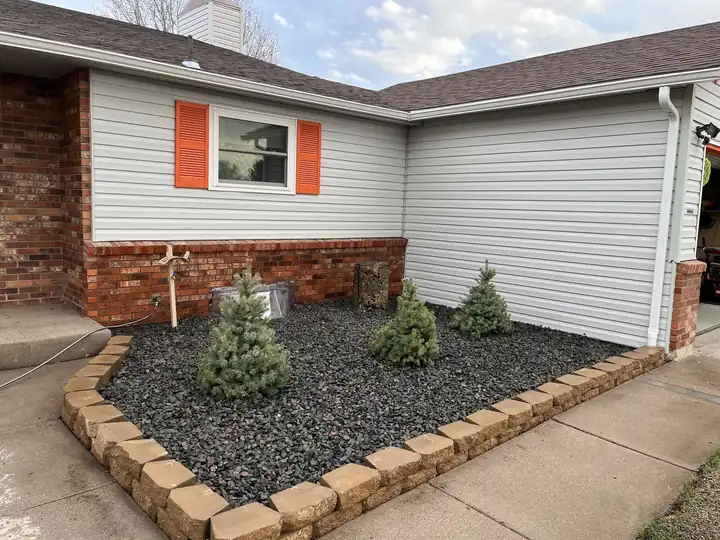
A rockscape bed uses gravel or larger decorative stone, sometimes with boulders and a few tough plants. It handles dry weather well and doesn't need mowing. In a windy place it has another advantage: stone stays put, where light mulch can end up in the neighbor's yard.
But a rock bed is only as good as what's underneath it. The pieces that matter are all hidden:
- Grading first: the bed should slope away from the house so water doesn't collect against the foundation.
- Weed fabric: a good landscape fabric under the stone slows weeds, though dust and blown seeds can still sprout in the stone itself, so expect some occasional pulling.
- Depth: a thin layer of stone lets the fabric show and the soil mix up. A layer deep enough to cover completely stays tidier and holds up better.
- Edging: without a firm edge such as pavers, steel or stone, the rock creeps into the lawn and onto the sidewalk.
- Stone size: small gravel is comfortable to walk on and easy to rake, while larger stone looks bolder but is hard to cross and hard to clean leaves out of.
One more thing to know: stone soaks up heat from the sun. Right against a south or west wall, a rock bed can run hot in summer, so choose plants for that bed carefully or leave it as plain stone.
Rock walkway: a path that works
A gravel or rock walkway is a good answer for the route people actually take, like the side yard path, the walk to the garden, or the line from the driveway to a gate. It drains well, it doesn't need watering, and it's quicker to install than poured concrete. The base is what decides how it ages. A path that is just stone poured on bare soil gets muddy, rutted and weedy. A path built on a firm, compacted base, with fabric underneath and edging along both sides, stays level and keeps its shape.
Think about how the path will be used. Wheelbarrows, strollers and wheelchairs struggle on loose, deep gravel, so a tighter, smaller stone compacted over a firm base suits those paths better. If it's meant to be walked on at night, keep the width comfortable and the edges clear, and avoid sharp stone with rough edges in places where people go barefoot.
Putting them together
A common arrangement is sod where people spend time, a rock bed along the house to keep soil from splashing up on the siding, and a rock walkway or stepping stones connecting the useful spots. Hard edges between the materials, such as paver edging or a clean trench, keep each one where it belongs and make the whole yard look planned rather than patched.
A few questions help settle it. How much time do you want to spend maintaining this area? Where does water go when it rains, or when the sprinklers run? Does the wind scatter things around that spot? Who walks there, and what are they carrying? The answers usually point you toward one material for each zone.
Rockscape and rock walkway are both project types on the LJC General Services site, along with retaining walls for yards that need to hold a slope. If you're weighing options for your own yard, call (307) 757-7287, Monday through Saturday, 7am to 7pm, and talk it through before you commit to a material.
LJC General Services, (307) 757-7287
Call (307) 757-7287More articles
When and How to Restain a Deck in Cheyenne's Sun and Wind
A Cheyenne deck fades and grays on its own schedule, and the boards will tell you when the finish has stopped doing its job.
Storm Door and Patio Damage After a Cheyenne Windstorm
Wind damage often looks smaller than it is, so a careful walk-around after the storm saves you from a second failure later.