When and How to Restain a Deck in Cheyenne's Sun and Wind
A Cheyenne deck fades and grays on its own schedule, and the boards will tell you when the finish has stopped doing its job.
October 21, 2026 · 4 min read
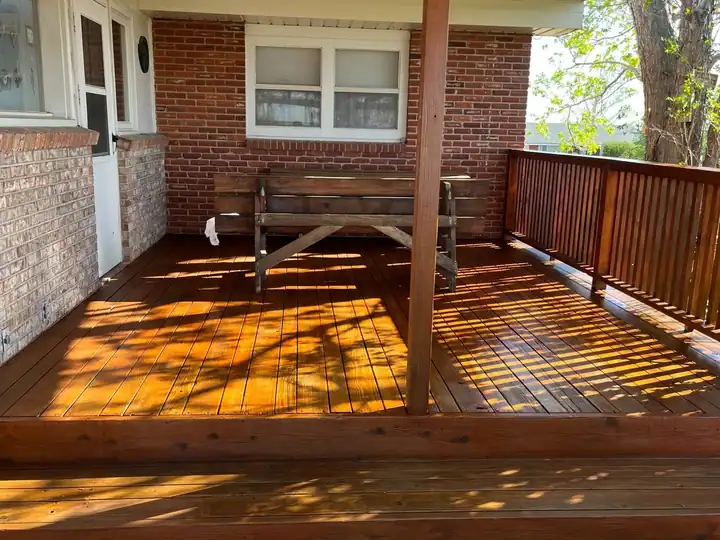
Why a Cheyenne deck wears out its stain early
A deck on the high plains gets hit from two directions. The sun is intense at this altitude, and it beats down on the flat boards from morning until evening all season. The wind adds to it, carrying grit and dust across the surface and scouring at the finish. Stain isn't paint. It soaks into the wood and protects from the inside, and once sun and weather have worn that layer down, the bare wood fibers start to gray and roughen. Gray boards aren't only a color problem. They mean the surface has stopped shedding water the way it should.
Signs it's time to restain
Don't go by the calendar alone. A south-facing deck with no shade ages much faster than a covered one on the north side of the house, so check the boards themselves.
- The water test: sprinkle a little water on a board. If it beads up, the finish is still working. If it soaks in and darkens the wood within a minute or so, the protection is gone.
- Uneven fading: patchy color usually shows first on the boards that get the most sun, and on the top of the railing.
- Graying: silver-gray wood on the surface means the old finish has worn through to bare fibers.
- Peeling or flaking: a film-type finish that lifts in sheets has failed. It has to come off, not be coated over.
- Roughness and dark spots: splintery boards, or dark stains around screw heads and board ends, mean water has been getting in.
Prep decides how long the stain lasts
The stain gets the credit, but preparation does most of the work. A good restain starts with an honest look at what's on the deck now. If the old finish is simply faded, a thorough cleaning to lift dirt, mildew and loose gray fibers is often enough. If it's peeling, it has to be stripped or sanded back to sound wood, because new stain can't bond to a failing layer.
Cleaning matters more than most people expect. Stain can only soak in where the wood is open and clean. Grit baked into the surface, or a film of old residue, keeps the new coat sitting on top, where it wears off quickly. After cleaning, the wood has to dry all the way through. Stain applied to damp boards traps moisture and tends to blotch. In a dry climate that often means a day or two of dry weather, but let the wood tell you: it should look and feel dry everywhere, including shaded corners and the undersides of rails.
Then comes the repair work. Reset or replace popped nails and screws, swap out boards that are soft or split, tighten any loose railing, and sand rough spots and splintered edges. Staining over a loose or rotting board just preserves the problem.
Picking the day and applying the stain
Sun and wind are the two things that make staining tricky here. Stain brushed onto a hot board in direct sun dries at the surface before it has a chance to soak in, and it leaves lap marks where one pass overlaps the last. Wind speeds up the drying even more and blows dust into wet stain. The best conditions are a calm, mild day, with the deck in shade or worked early or late in the day, and no rain expected for at least a day afterward.
Work in sections that follow the length of the boards, end to end, so you never leave a wet edge drying halfway across a plank. Work the stain into the wood with a brush or pad rather than flooding it on, and wipe up any puddles or excess left sitting on top. Extra stain that doesn't soak in adds no protection. It forms a sticky film that peels later. Don't skip the rails, spindles and stair edges, since they take just as much sun as the floor of the deck, and the cut ends of boards drink more stain than any other part.
Opaque, semi-transparent or clear
Pigment is what blocks sunlight, so the more pigment a stain carries, the longer it generally protects the wood underneath. Clear and very light finishes show off the grain but give the least sun protection, which means redoing them more often. Semi-transparent stains keep the grain visible and strike a reasonable balance. Solid, heavily pigmented stains hide the grain and last longest, but they act more like paint and can peel if the surface wasn't prepped well. For a deck that takes full afternoon sun, more pigment is usually the practical choice. Whatever you pick, test it on a hidden board first, because the same stain looks different on old gray wood than on fresh lumber.
Knowing when to hand it off
Restaining is a perfectly good weekend job for a small, solid deck in decent shape. It gets harder when the deck is large, when the old finish has to be stripped, when the stairs and rails involve a lot of detail work, or when you find soft boards that need replacing first. At that point the prep and repairs take more time than the staining itself, and a missed step shows up within a season or two as peeling or blotchy color.
Deck stain is one of the project types on the LJC General Services site, and the painting page lists deck and fence refinishing alongside interior and exterior painting. If you're not sure whether your deck needs a simple restain or a full strip, call (307) 757-7287, Monday through Saturday, 7am to 7pm, and ask for a quote.
LJC General Services, (307) 757-7287
Call (307) 757-7287More articles
Storm Door and Patio Damage After a Cheyenne Windstorm
Wind damage often looks smaller than it is, so a careful walk-around after the storm saves you from a second failure later.
Rockscape, Rock Walkway or Sod for a Dry Cheyenne Yard
Each ground cover has a job it does well and a job it does poorly, and a dry, windy yard exposes the difference quickly.